
Centrosome dysfunction and disease
Mutations in genes that encode certain centrosomal proteins lead to human disorders such as microcephaly (small brain) and dwarfism. However, it is unclear how centrosomal dysfunction at the cellular level leads to developmental anomalies at the organismal level. How do defects in an organelle present in most cells cause tissue-specific phenotypes?
Combining powerful genetic and imaging approaches, we use the zebrafish as a model system to determine the pathogenesis of centrosome-related diseases. Our goal is to bridge the knowledge gap between centrosomal dysfunction and disease phenotypes.
The zebrafish model system
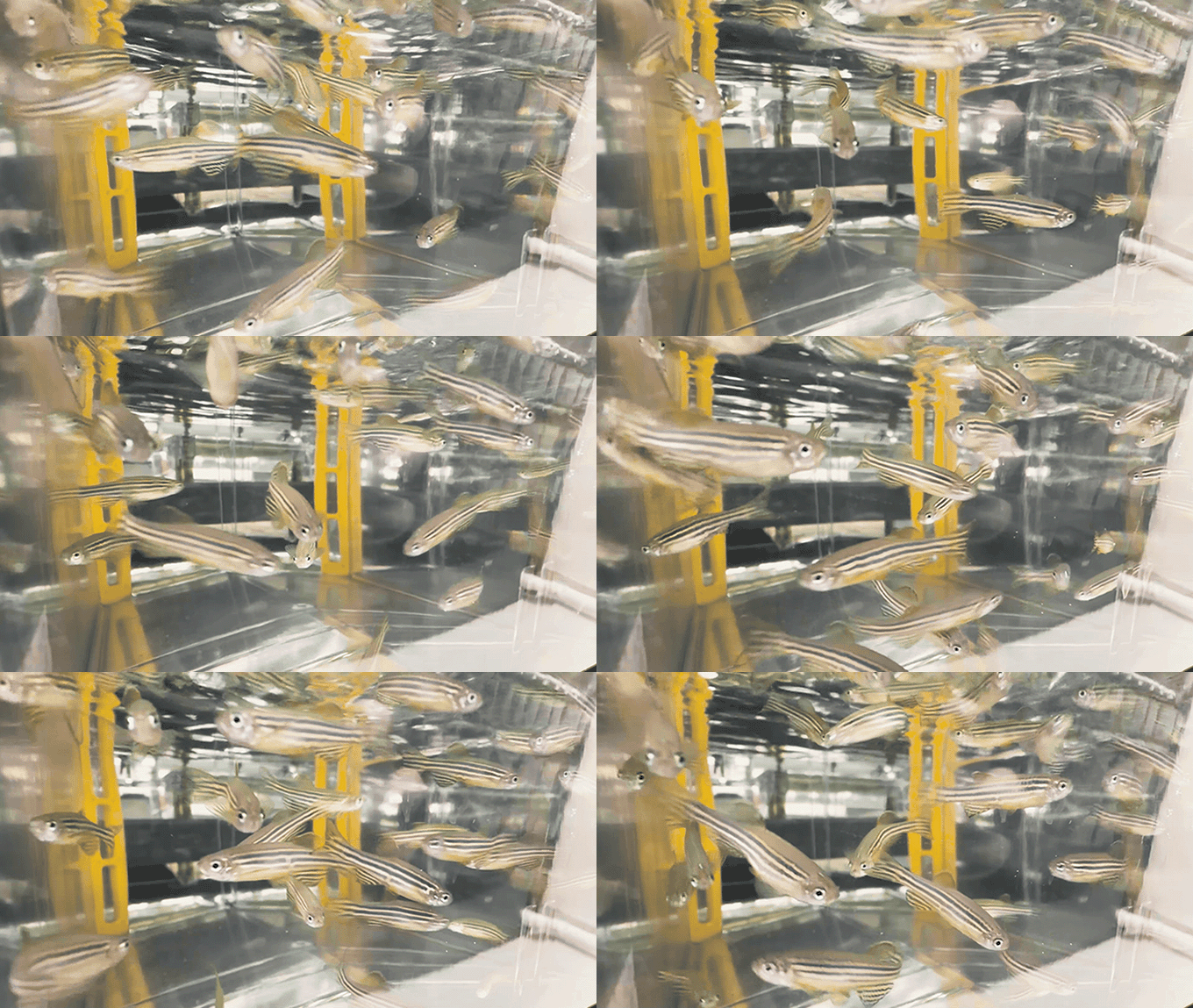
Zebrafish (Danio rerio), the tropical fresh-water fish originally found in the streams at the base of Himalayan mountains, has become a valuable vertebrate model in the laboratory due to their small sizes, fast embryonic development, fecundity, and transparent embryos.
Approximately 70% of human genes have at least one counterpart (ortholog) in zebrafish. Many cellular processes are conserved between human and zebrafish. These attributes make zebrafish an attractive vertebrate model to study human diseases.
As the embryos develop outside of the mothers and are transparent, they can be subjected to various experimental manipulations to study their early development since birth.
We use zebrafish not only as a model for studying their developmental biology, but also as a in vivo system for studying cellular and biochemical processes at subcellular levels.

A zebrafish model of Microcephalic Osteodysplastic Primordial Dwarfism Type II (MOPD II)
Biallelic loss-of-function mutations in human pericentrin (PCNT) lead to MOPD II, a rare autosomal recessive disorder characterized by severe dwarfism, microcephaly, and vascular and bone defects.
Using the CRISPR gene editing technology, we generated pericentrin mutant zebrafish that recapitulate several key human MOPD II-like defects, including dwarfism and microcephaly.
We are investigating how the cellular defects upon the loss of Pericentrin lead to these developmental anomalies.
